
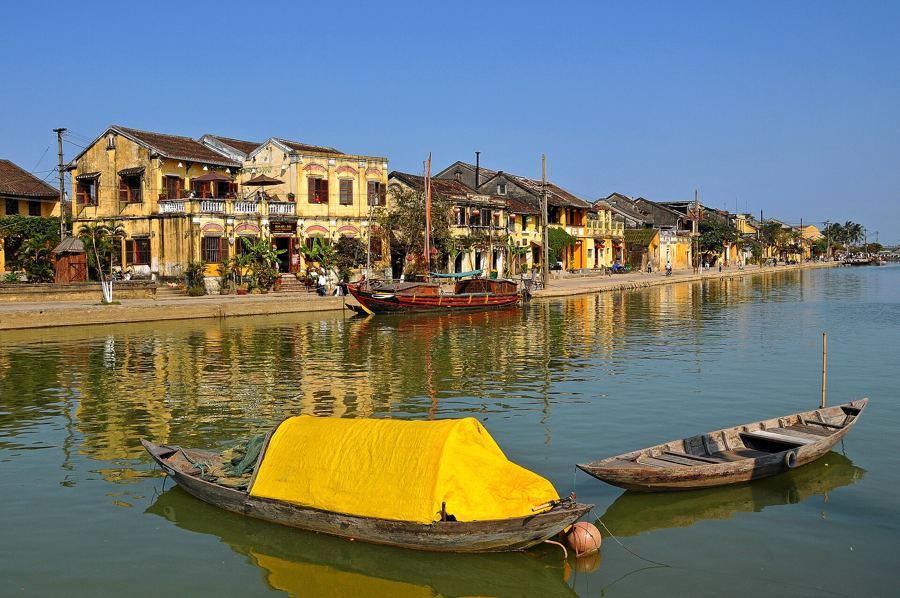
Half past one, and the heat in Hoi An is at its worst. The light on the yellow walls is almost white, the river looks flat and still, and the streets of the Old Town are close to empty. The only places with any life are the cafes: open fronts, low stools, fans, and people who have no intention of moving for an hour. This is the coffee hour.
Vietnam takes coffee seriously, and it drinks it in its own way. You will not find much of the espresso-bar rush here. Coffee is something you sit with, and the slow drip of the phin filter sets the pace.
Why robusta
Coffee came to Vietnam with the French in the 19th century, and it took. Today Vietnam is one of the largest coffee producers in the world, and most of what it grows is robusta, mainly in the Central Highlands, inland from this coast. Robusta is a hardier plant than arabica, suited to lower altitudes and heat, and its beans have more caffeine and a stronger, more bitter taste.
That strength shapes the way coffee is drunk. Vietnamese coffee is usually roasted dark, sometimes with a little butter or other flavourings in the roast, and brewed strong. On its own it is intense; with sweetened condensed milk and ice, it becomes something else.
The phin
The phin is a small metal filter, usually aluminium or steel, that sits on top of a glass or cup. Ground coffee goes into the chamber, a thin metal press goes on top of the grounds, and hot water is poured in. Then you wait. The coffee drips through slowly, a few drops at a time, and a single cup can take several minutes.
The lid of the phin is often used as a saucer: when the dripping stops, you lift the filter off, set it upside down on its lid, and stir. If the coffee is barely dripping, the press is too tight; if it runs straight through, too loose. In a good cafe, nobody needs to touch it.

Ca phe sua da
The classic order is ca phe sua da: iced coffee with condensed milk. The coffee drips onto a layer of sweetened condensed milk at the bottom of the glass, then you stir it until it turns the colour of caramel and pour it over a glass of ice. It is sweet, strong and very cold, which is what you want at this hour.
The usual explanation for the condensed milk is practical: fresh milk was scarce and spoiled quickly in the heat, and tinned milk kept. Whatever the reason, the combination is now the standard. If you want it less sweet, ask for "it duong", or order ca phe den, black, hot or iced.

Many cafes bring a glass of iced tea with the coffee, or after it. It is part of the custom, and in most places it is free and refilled while you sit.
Hot or iced
In the heat of the afternoon almost everyone drinks coffee iced, and the ice melts fast enough that the glass changes as you drink it, getting gentler over half an hour. Hot coffee, ca phe nong, is more of a morning drink, sometimes served in a small cup set in a bowl of hot water to keep it warm while the phin drips. In the cooler, wetter months from October to December, more people drink it hot in the afternoon too. Either way, the coffee is strong, and a glass of robusta carries a good deal more caffeine than most visitors expect: if you are sensitive to it, one is plenty.
 15:00Silk and the old mulberry trade
Egg coffee and coconut coffee
Two newer drinks have spread far beyond their birthplaces. Egg coffee, ca phe trung, comes from Hanoi: egg yolk whipped with sugar and condensed milk into a thick, sweet foam, spooned over strong coffee. It is rich enough to be a dessert, and in Hoi An you will find it on many menus aimed at visitors.
Coconut coffee, ca phe cot dua, is coffee poured over a slush of coconut cream, condensed milk and ice, blended until it is thick. It is very sweet, very cold and very good at half past one in May. Some places add salt coffee, a newer drink with a salted cream topping, or yogurt coffee. They are all variations on the same idea: strong robusta, something sweet and creamy, and ice.
How to sit in a cafe
The cafe in Hoi An is a place to stay, not to pass through. Nobody brings the bill until you ask, nobody minds if you sit for an hour over one glass, and many people come back to the same place every day. Seats face the street, so that sitting is also watching: the motorbikes, the vendors, the occasional cyclist wobbling past in the heat.
Bring nothing to do. A book is fine and a phone is normal, but the custom is simply to sit, talk a little and watch. In the hour after lunch nobody is in a hurry, and a visitor who is looks out of place.
Small stools are normal, and the lower the stool, the more local the place tends to be. Pay at the end, at the counter or to whoever brought the coffee; prices are on a board or a menu and change over time. Tipping is not expected.
Places range from a few stools on a pavement to restored shophouses with courtyards and fans. Both make good coffee. The pavement version is cheaper and better for watching the street; the shophouse version is cooler and better for staying put.
Then the afternoon
By three, the sun drops a little, the shadows lengthen across the lanes, and the town begins to move again. The tailors reopen their fitting rooms; our page on how a suit gets made in two days starts at two, for anyone with a fitting to make. If you ate a bowl of mi Quang before the coffee, you have done the Hoi An midday properly: noodles, coffee, shade, and nothing more strenuous than stirring the glass.